Sunday, 25 January 2015

Green Patriot Posters

 
Green Patriot Posters is a website which subscribers can create posters to the site and upload them for the public to view. The posters that are designed are campaigning against fossil fuels and against deforestation and ways in which we are destroying our planet and atmosphere.
 
I used this site for inspiration for a previous project which I have just completed which was visual communication in art and graphic design where I had to create a poster about protesting. I chose the subject to promote green energy which is wind energy, solar power, hydro power etc. n the end I made a poster of wind turbines with the slogan "BUILD OUR FUTURE" to leave it up to us as society to fix our planet and mistakes.

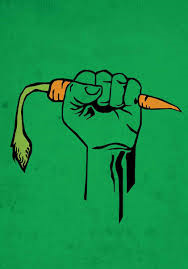
Shepard Fairey

 
Shepard Fairey is an Artist, street artist, graphic designer and illustrator and lives and works in the USA. He was born on February 15th 1970 and is known for his "Andre the Giant" sticker campaign in the 1990s where he emerged form the skateboarding scene and became an artist and political artist. Now he is most commonly known for a piece he created during the 2008 US election of Barack Obama called "HOPE", he created this piece by just using three different colours: red, blue and cream. He used these colours to create Obama because he believed that they sent the message of Patrionism to the public. He didn't want Obama to look like a black man but to make him a man to nationalise hence the colours.
 
In the past he has created rebellious pieces and with his second child on the way at the time he had the thought that he wanted the best future he could possibly get for his children so therefore he created a piece with Obama on for his political status and to advertise him and his party to win the election which he di, Fairey just wanted what's best for his children as they are the future of America.


Eye Magazine Article

Drive In Cinemas

For my professional practice magazine I chose to do the Eye Magazine, this is because it contains a majority of graphic design and typography which I am very interested in.
 
I came across an article about drive-in cinemas in the US from the 1930s in their prime to now where they are run down and even housing built upon the car parks where they were situated. I read the article and it described how they went from being extremely popular in the early 20th century where all the young adults would come and meet and have a great time out to how they got less and less people visiting the cinemas. What was interesting about the signs were the typography and how they used pop culture to advertise the cinemas by giant signage with high text close to the font Britannic bold. They used nylon background with flashing light bulbs and bright colours to welcome visitors into the cinemas.
 
Now all that remains of these signs are run-down rusted left overs from what once was a great era of American pop culture are these giant signs which is the little that is left of the great drive-in cinemas.
Drive-in cinemas have always looked spectacular to me from living in the UK as we don't have the weather for it over here and it would be a great experience to go to a drive-in cinema.


Tuesday, 2 December 2014

Chesterfield College Art and Design Exhibition


When I went to the Chesterfield College Art exhibition I found these three images which I particularly eyecatching and they just appealed to me. They were three prints which had few colours on: a shade of pale blue mixed in tih black and white. One consisted of a tank which one side was in the shade and the colour of the ground was white with blue sky, another was a man looking up like he was looking at you when looking at the piece like he was waving and the other was a metal fence which looked like it was in the moonlight. All these pieces had letters which were cut out of newspapers and magazines which were stuck onto the piece when printed then taken off after so that it gave a stencil look off which worked exceptionally well. 


V&A

Alan Fletcher


Alan Fletcher is one of the World's best known Graphic designers and typographers and he designed the V&A Logo in 1990. There had been many different symbols and shapes to the V&A logo in the past but trustees commisioned a new logo to be made to replace the others. The letters which were used for the logo were designed by Gianbattista Bodoni around almost 200 years ago. What Fletcher did was take the stem of the A (leg) and removed it and tucked the ampersand into the A and also removed the crossbar of the A. However this did not disrupt the logo, in fact it was so unique and that people can still read it and know what it is that it is still used now for the logo of the Victoria and Albert museum now. This is a very simple design which is very effective and is known World wide. 

Joseph Penell 


Joseph Penell was born on the 4th of July in 1857 and died on the 23rd of April in 1923 and he was well known for being an artist and an author.
He first studied in Pilidelphia but soon went on as many did in those days and moved over to Europe where he made his home in London. He was an Author throughout his days but also a keen etcher and lithographer and also as an illustrator. He also taught at Slade School of Art but what I think is great about his works is the details in which it goes to to create shadows especially in his mono tone prints and drawings as he uses different shading techniques such as cross hatching, hatching and smudging and many more. The industrial scenes are very good as if he's sending a message through the drawing of manual labour and people working with machines. He really expresses feelings and hard work through these drawings and uses shading to complete the image as a whole to bring it all together. 


Tuesday, 25 November 2014

Roy Lichtenstein 


Roy Lichtenstein’s work was first impacted by comic books and cartoons; this is where his ideas come from. His main artworks were influenced by comic strips.
He turned commercial images and fine art into images which looked like comic books and advertisements and turning them into paintings whilst also adding type too. Lichtenstein used colour as if it was printing ink. He included little tiny dots so that all his paintings and images looked like they were in the style of cartoons. No one at this time created art like Roy Lichtenstein and he was quoted as “The worst Artist in America” by the life magazine. Although he was known as the worst artist at this time it was because he was so beyond the realm of fine art that the art critics were all outraged in his works.

Lichtenstein's best-known work from this period is "Whaam!," which he painted in 1963, using a comic book panel from a 1962 issue of DC Comics' All-American Men of War as his inspiration. Other works of the 1960s featured cartoon characters like Mickey Mouse and Donald Duck and advertisements for food and household products. He created a large-scale mural of a laughing young woman (adapted from an image in a comic book) for the New York State Pavilion of the 1964 World's Fair in New York City.